The NYT Connections Game is a popular word puzzle from The New York Times that challenges players to find links between groups of words. If you enjoy word games like Wordle or the Crossword, Connections offers a fresh and engaging twist. In this guide, we’ll explain how to play, strategies to improve, and ways to find hints and connections answers for today’s puzzle.
How to Play NYT Connections
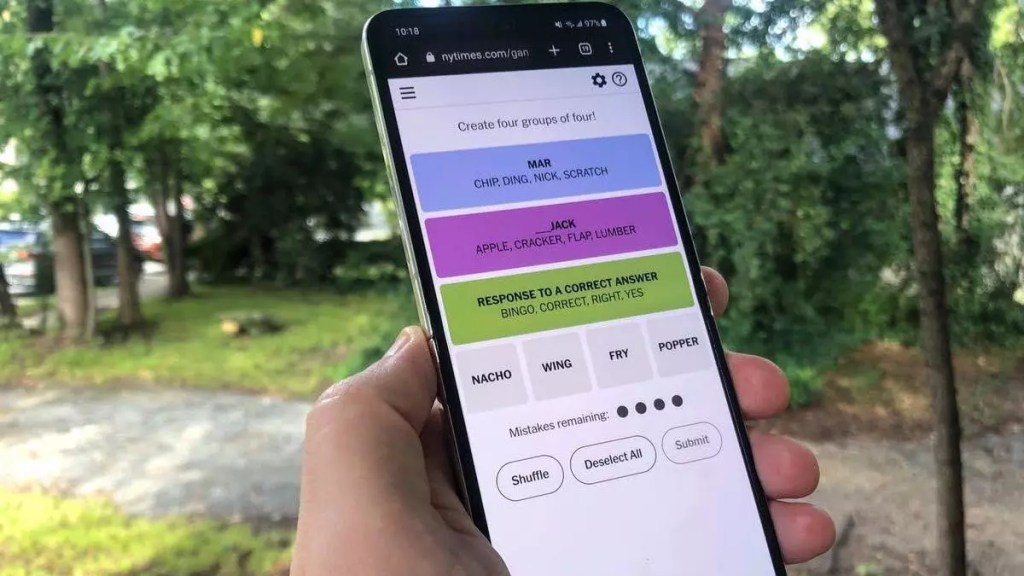
The objective of NYT Connections is simple: group 16 words into four categories of four related words each. The connections can be based on synonyms, themes, wordplay, or shared contexts.
Basic Rules
- Grid Setup: You’re presented with a 4×4 grid of 16 words.
- Grouping Words: Select four words that share a common theme or connection.
- Submission: Submit your group to see if it’s correct.
- Mistakes Limit: You’re allowed up to four mistakes before the game ends.
- Winning: Successfully group all 16 words into four correct categories to win.
Example
Suppose the words are: Apple, Banana, Orange, Pear, Lion, Tiger, Bear, Wolf, Rose, Tulip, Daisy, Lily, Carrot, Potato, Onion, Garlic.
Possible groups:
- Fruits: Apple, Banana, Orange, Pear
- Animals: Lion, Tiger, Bear, Wolf
- Flowers: Rose, Tulip, Daisy, Lily
- Vegetables: Carrot, Potato, Onion, Garlic
How to Get Better at NYT Connections
Improving at Connections requires a mix of vocabulary knowledge, pattern recognition, and creative thinking. Here are some strategies to help you solve puzzles faster and more accurately.
Look for Obvious Categories First
Scan the grid for the most straightforward connections. Words with clear similarities (like fruits, animals, or colors) are often the easiest to spot.
Pay Attention to Multiple Meanings
Some words belong to different categories based on their meanings. For example, Orange could refer to a fruit or a color. Consider all possible interpretations.
Eliminate Outliers
If a word doesn’t fit with any obvious group, set it aside temporarily. Often, the remaining words will reveal a pattern that includes the outlier.
Think Outside the Box
Connections can involve:
- Homophones (words that sound alike)
- Prefixes or suffixes (e.g., words starting with “un-“)
- Pop culture references (movie titles, song lyrics)
Practice Regularly
The more puzzles you solve, the better you’ll recognize common NYT Connections themes. Play daily to sharpen your skills.
How to Get Hints and Answers for Today’s NYT Connections Game
Sometimes, a puzzle stumps even the best players. If you’re stuck, here are ways to find hints or answers without spoiling the entire puzzle.
Use Progressive Hints
- First Hint: A vague clue about one category (e.g., “Think of fruits”).
- Second Hint: A more direct clue (e.g., “Citrus fruits”).
- Third Hint: One correct word from a category.
- Full Answer: The complete group revealed.
Analyze Word Patterns
- Letter Counts: Check if words share the same number of letters.
- Common Prefixes/Suffixes: Look for repeating beginnings or endings.
- Synonyms: Some words may mean the same thing in different contexts.
Check for Today’s Answers
If you’re completely stuck, you can look up today’s NYT Connections answers. Many websites and forums discuss daily solutions, but use them sparingly to keep the game fun.
Reverse Engineering
If you know one category, see how the remaining words might connect. Eliminating known groups simplifies the rest of the puzzle.
Final Thoughts
The NYT Connections Game is a fantastic way to test your vocabulary and lateral thinking. By practicing regularly, using strategic hints, and learning from each puzzle, you’ll improve over time. Whether you play for fun or challenge yourself to solve without mistakes, Connections offers a rewarding brain workout.
 NYT Connections Hints Today Clues, Help and Answers